

Leadership & Culture
Guide • 5 min read • Aug 5, 2026
Building a Positive Hospitality Culture
How hospitality leaders build a healthier, more consistent team culture through daily behaviour rather than slogans.
Read story

Leadership & Culture
Before the world's most celebrated chefs, hoteliers and founders became names worth knowing, they had something in common: a beginning. Inside the opportunities, ambitions and experiences shaping hospitality's next generation.
Written by Shiftly Editorial Team
10 min read
Before Nobu became Nobu
Nobu Matsuhisa began his apprenticeship at 18, spending his first three years learning the restaurant's fundamentals.
From Madeira to Bora Bora
International placements take hospitality students from Michelin-starred kitchens to extraordinary luxury resorts.
Service defines luxury
Forbes Travel Guide's 2025 evaluation weighted service at 70% and facilities at 30%.
Hospitality takes to sea
Evrima, Ilma and Luminara bring The Ritz-Carlton Yacht Collection's luxury hospitality to destinations around the world.
Somewhere in the world, a future great chef is learning how to hold a knife with precision.
A future hotel general manager is preparing to welcome their first guest.
A future hospitality entrepreneur is discovering what exceptional service truly demands.
They do not have the titles yet. The awards. The recognition.
Some are still students.
But long before the world's most extraordinary hospitality experiences become possible, someone has to learn how to create them.
And that journey often begins with a first opportunity.
Today, Nobu is more than a name.
It is an international collection of celebrated restaurants, hotels and experiences that have helped define contemporary luxury hospitality.
But long before that name appeared above restaurant entrances around the world, Nobu Matsuhisa was an eighteen-year-old apprentice in Tokyo.
And for the first three years, he barely prepared sushi.
Instead, he washed dishes, made deliveries and learned the daily rhythm of a professional restaurant.
Only later did he begin developing the techniques that would eventually become central to his culinary identity.
His apprenticeship lasted approximately seven years.
Peru came afterwards. Then the United States. Then the restaurants, partnerships and international recognition that transformed an individual's name into a global hospitality brand.
The distance between those early years and the world Nobu would eventually create is extraordinary.
But his is not the only story.
At fourteen, Horst Schulze left home in Germany to begin a hotel apprenticeship.
His early responsibilities included washing dishes, cleaning ashtrays and preparing dining rooms.
During that experience, he encountered a maître d' named Karl Seidler.
Schulze would later recall how Seidler treated hospitality service not as an inferior occupation, but as work deserving of genuine pride and professional excellence.
The lesson stayed with him.
Decades later, Schulze would help establish the service philosophy associated with The Ritz-Carlton Hotel Company.
A teenager learning the fundamentals of hotel service.
An apprentice spending years preparing to become a sushi chef.
Two different beginnings, in two different countries, long before either name became associated with exceptional hospitality.
Their stories are remarkable because of what followed.
But they also reveal something the industry sometimes overlooks.
Before the recognition, there was the work. And before the work became a career, someone had to provide an opportunity to learn.
For the next generation, that first opportunity remains one of the most important decisions they will make.
Except today, the possibilities extend far beyond a single restaurant or hotel.
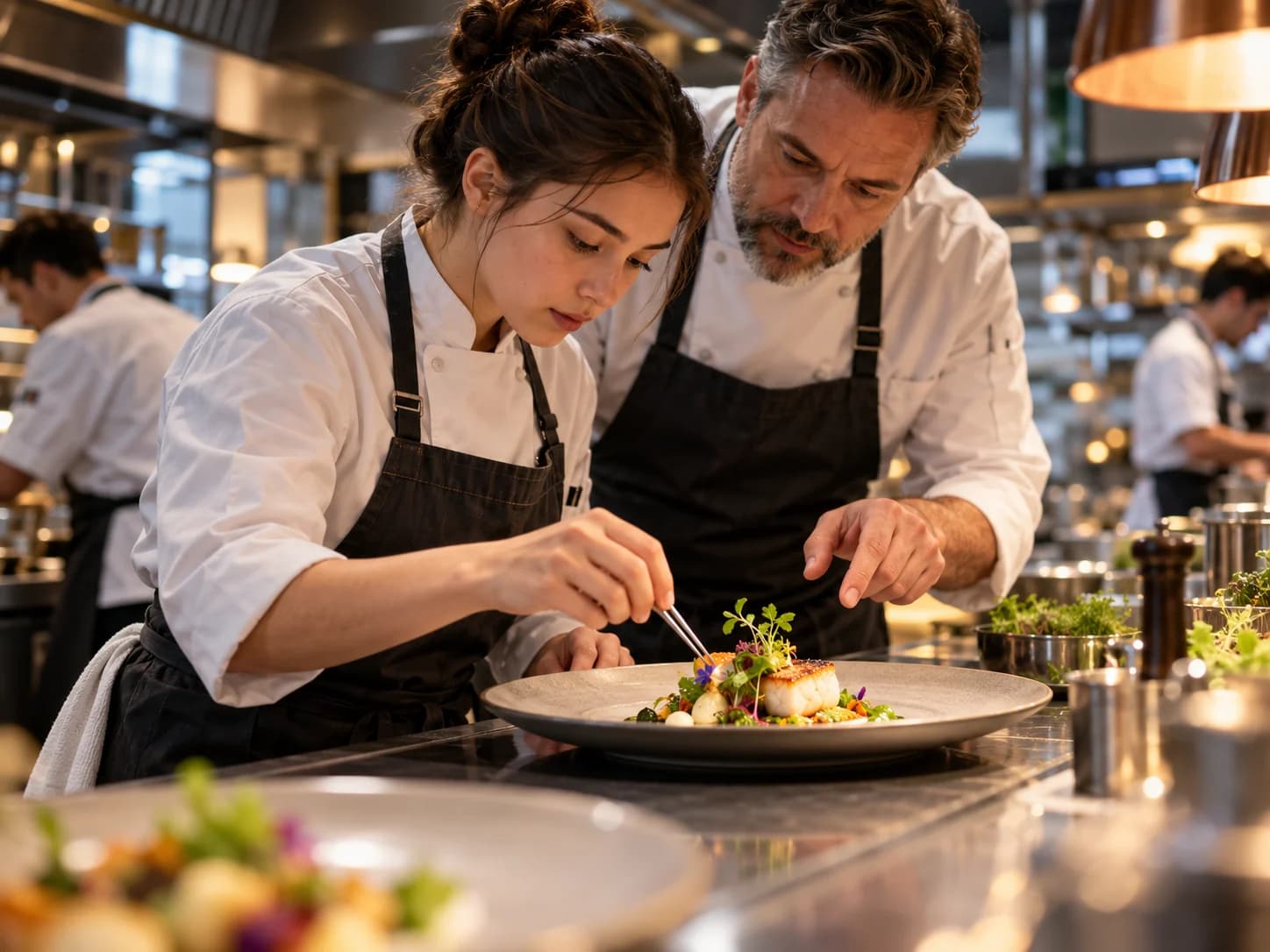
In a professional kitchen on the Atlantic island of Madeira, a young culinary student was discovering what two Michelin stars demand.
Alexandra, studying at France's Institut Lyfe, had travelled to Madeira for an internship at Il Gallo d'Oro.
She progressed within the kitchen's pantry section, contributing to preparation and plating, and learning the precision expected in a restaurant operating at that level.
For a student with ambitions in fine dining, the experience offered more than a prestigious name on a résumé.
It brought her into direct contact with the daily standards of a celebrated culinary team.
And her ambitions already extended beyond the internship itself.
According to Institut Lyfe, Alexandra hopes to continue developing her skills in gastronomy before eventually opening a restaurant of her own.
Thousands of kilometres away, another student from the same institution was experiencing a very different expression of luxury hospitality.
At The St. Regis Bora Bora Resort, Lena undertook an internship as a butler.
Her responsibilities revolved around a different kind of precision.
Anticipating guests' expectations.
Understanding personal preferences.
Maintaining discretion while delivering highly individual service.
Working within a team where the smallest detail can shape the guest experience.
One student was learning inside a Michelin-starred culinary brigade.
The other was discovering the demands of personalised hospitality in a remarkable South Pacific resort.
Their paths were different, but both reflected the extraordinary international opportunities available within the profession.
This global dimension is an important part of hospitality education.
At EHL Hospitality Business School in Switzerland, students undertake an operational internship followed by a second placement focused on business and management responsibilities.
Their professional experiences can expose them to areas ranging from kitchen operations and guest service to events, marketing, revenue management and other business functions.
Education may establish the foundations.
But a professional environment introduces something no classroom can fully reproduce.
Real expectations.
Real responsibility.
And the human unpredictability that defines hospitality.
A restaurant service does not always unfold according to plan.
A hotel guest's requirements cannot always be anticipated through a procedure.
And international experience adds another layer: different cultures, teams, languages and approaches to service.
These environments can be exhilarating.
They can also be demanding.
The prestige of a destination does not eliminate the difficulty of adapting to it.
But for students willing to discover a world beyond what they already know, the rewards can extend beyond professional skills.
They may return with new ambitions.
New confidence.
And a clearer understanding of the kind of career they want to build.
Sometimes, the most important thing a student discovers abroad is how far their future could take them.

Imagine entering one of the world's most extraordinary hotels.
The architecture is breathtaking.
The suites are immaculate.
The surroundings are everything you imagined luxury would look like.
But when the journey is over, what will you remember?
Perhaps it will be the concierge who helped you discover a side of the destination you would never have found alone.
The restaurant manager who transformed a dinner into an unforgettable evening.
Or the member of staff who noticed something small, understood its importance and made you feel genuinely cared for.
These are the moments no architect can design in advance.
And there is a revealing detail in the way some of the world's most exceptional hospitality establishments are judged.
Forbes Travel Guide, whose inspectors anonymously evaluate luxury hotels, restaurants, spas and cruises, stated in its 2025 Star Awards that service accounts for 70% of a property's rating.
70%
SERVICE IN THE ASSESSMENT
30% facilities
Source: Forbes Travel Guide, 2025
The remaining 30% concerns the quality and condition of the facilities.
An extraordinary building matters.
But the people inside it matter even more to that assessment.
Think about what that means.
A hotel may invest enormously in architecture, interiors and extraordinary surroundings.
A restaurant may commission a remarkable dining room and build its identity around celebrated culinary talent.
Yet the final experience depends on countless human decisions.
How a guest is welcomed.
How a problem is resolved.
Whether someone remembers a preference without turning the interaction into a performance.
Whether a team can make a complicated service feel completely natural.
In a Michelin-starred kitchen, precision may be expressed through the preparation of a single ingredient.
In a dining room, it may be knowing exactly when to approach a table and when not to.
In a hotel, it may be the ability to make someone feel at home thousands of kilometres from where they actually live.
These skills are rarely the subject of spectacular photographs.
But they are among the reasons guests return.
For students entering hospitality, that creates an extraordinary kind of responsibility.
They may begin by observing.
By preparing.
By learning the rules of a profession whose standards have been developed over generations.
But eventually, they will become the people responsible for delivering those experiences themselves.
A future general manager does not begin by managing a hotel.
A future maître d' does not begin by leading an entire dining room.
And a future great chef does not begin with an international reputation.
They begin by learning the craft behind the experience.
The world's most beautiful hotels and restaurants may capture our attention. But it is the people who make us want to return.
And as the industry creates new destinations and entirely new forms of luxury hospitality, those skills are finding their place in environments that previous generations could scarcely have imagined.
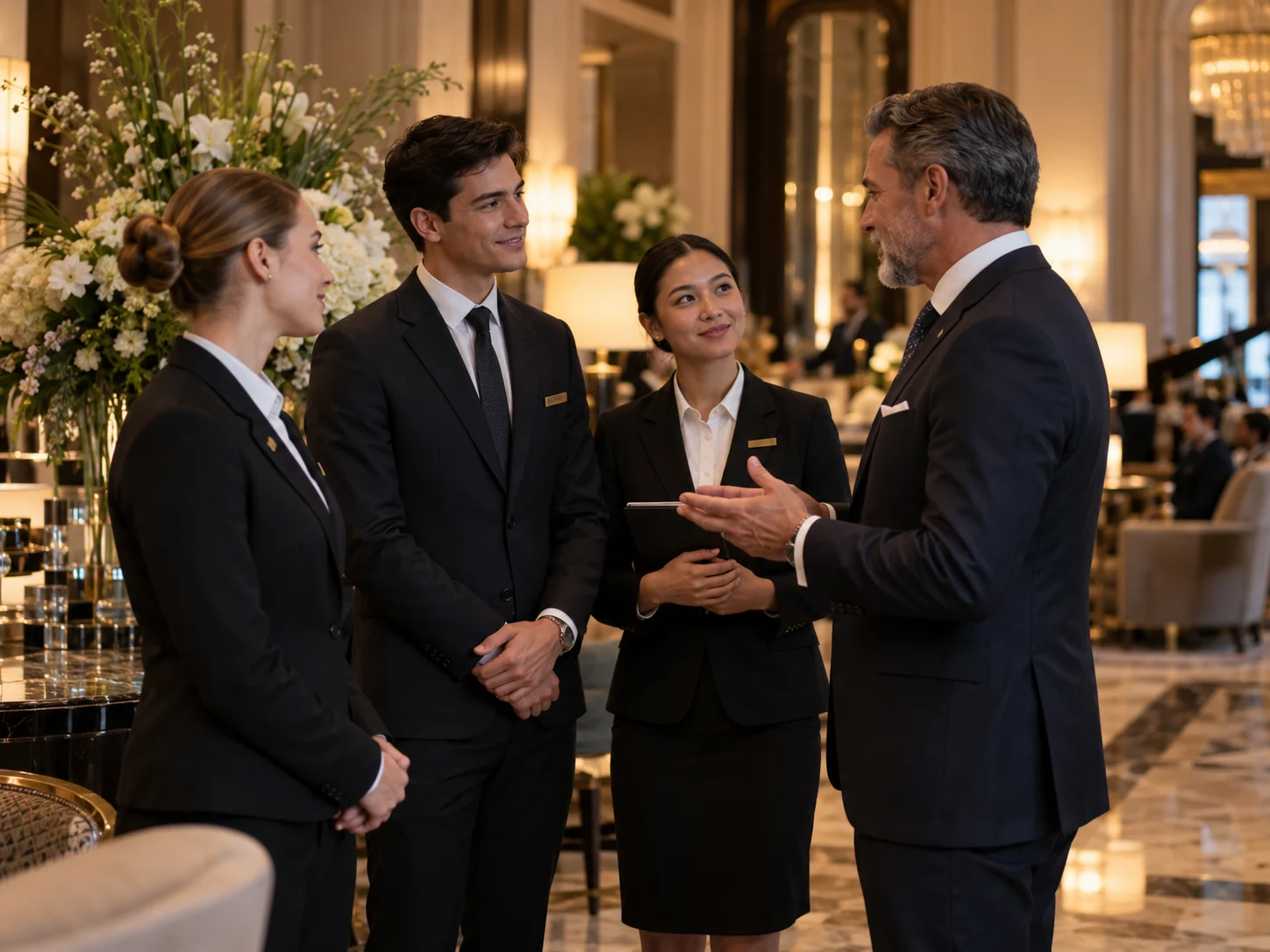
A five-star hospitality experience does not always come with a street address.
Sometimes, it has a destination that changes every morning.
Imagine working aboard a luxury yacht.

An exceptional restaurant overlooking the Mediterranean. Personalised service delivered far from the familiarity of a traditional hotel. New coastlines, new cultures and a different world waiting beyond the next port.
For guests, it is an extraordinary way to travel.
For the professionals behind the experience, it is another world in which to practise hospitality.
In October 2022, The Ritz-Carlton Yacht Collection introduced Evrima, bringing the brand's approach to luxury service onto the open sea.
Ilma followed in September 2024.
Then came Luminara in July 2025, expanding the collection to three superyachts.
Each represents an evolution of the traditional luxury hotel experience.
On Ilma, guests can discover five dining venues, seven bars, a spa, a marina and suites designed around expansive views of the sea.
But behind those experiences is an entire hospitality operation.
Chefs preparing exceptional dining experiences.
Restaurant managers overseeing service across different venues.
Sommeliers, concierges and guest-relations professionals creating highly personalised journeys.
Housekeeping, wellness and operational teams coordinating the details that keep everything running.
The scenery may change.
The standards do not disappear when the yacht leaves the harbour.
In fact, working at sea introduces challenges that a traditional restaurant or hotel may never face.
Space is different.
Logistics are different.
Teams live and work in close proximity, while destinations and guest expectations change throughout the journey.
Even familiar hospitality roles take on new dimensions.
The Ritz-Carlton Yacht Collection's career opportunities span culinary operations, restaurants, beverages, housekeeping, guest services, wellness and specialist maritime functions.
It is a reminder that the skills developed in hospitality can take professionals into environments far removed from where they first learned them.
And Ritz-Carlton is not alone in bringing exceptional hospitality to the water.
In May 2026, Orient Express Corinthian began its inaugural sailing season.
With just 54 suites, the luxury sailing yacht extends the heritage of Orient Express into a new world of maritime hospitality.
Its dining experiences have been developed under the culinary direction of Michelin-starred chef Yannick Alléno, bringing together gastronomy, personalised service and the romance of international travel.
These are not simply beautiful vessels.
They illustrate a larger evolution in the industry.
Hospitality is no longer defined exclusively by the grand hotel, the traditional resort or the celebrated restaurant.
It extends into private journeys, extraordinary destinations and experiences that combine multiple disciplines.
That does not mean every student can immediately begin working aboard a luxury yacht. Such positions often require substantial experience, specialist training or maritime certifications.
But for someone studying hospitality today, there is something exciting about seeing how far the profession can extend.
A student passionate about cuisine may eventually work in a restaurant that crosses oceans.
Someone drawn to personalised service may discover a career creating remarkable experiences at sea.
A future hospitality leader may one day manage an operation unlike any establishment they imagined during their first year of study.
The world of hospitality is becoming larger than many of the traditional career paths associated with it.
And the people preparing to enter the industry today will have the opportunity to explore that expanding landscape.
Your first opportunity may begin in a classroom, a kitchen or a hotel. But your career could take you somewhere you never imagined.
Some of the world's most extraordinary hospitality experiences have yet to be created.
The next restaurant that changes how people think about dining.
The next hotel that becomes a destination in its own right.
The next concept that brings together travel, culture and a different understanding of luxury.
We do not know who will create them.
And perhaps that is the most fascinating part.
Somewhere today, the people who will shape those experiences are still learning.
They are discovering how professional kitchens operate.
Learning to understand guests from different cultures.
Developing confidence in unfamiliar environments.
And making decisions about careers whose possibilities they have only begun to explore.
Some will become chefs.
Others will become sommeliers, concierges, restaurateurs, hotel managers, entrepreneurs or leaders in fields that hospitality has not yet fully defined.
Some may eventually build internationally recognised names.
Many will never seek that kind of recognition.
Both paths matter.
Because exceptional hospitality has never depended only on the people whose names appear above the doors.
It depends on the professionals whose expertise makes those places worth experiencing.
The next generation will inherit an industry built on extraordinary traditions.
But it will also bring new expectations, different cultural perspectives and ideas about how hospitality should evolve.
And that creates an opportunity for the people already leading the profession.
To recognise ability before it becomes obvious.
To share knowledge before it is lost.
To give young professionals meaningful responsibility while they are still discovering what they can do.
A student's first opportunity may not appear particularly important to an organisation employing hundreds or thousands of people.
For the person receiving it, however, that experience may become the beginning of everything that follows.
The profession's future is not being created exclusively in boardrooms or through the opening of remarkable new destinations.
It is also developing wherever someone is given the chance to learn.
And tomorrow's greatest contribution to hospitality may come from a person whose name nobody in the industry knows today.
A hospitality student is deciding whether to accept an opportunity thousands of kilometres from home.
A restaurant manager is showing a new colleague what makes exceptional service feel effortless.
A hotel employee is discovering an ambition they did not know they had.
These moments rarely become headlines.
There are no awards announcing that a future leader has completed a first shift.
No international recognition for the student who has finally mastered a difficult technique.
No guarantee that an early opportunity will lead to an extraordinary career.
But that uncertainty is part of what makes the beginning so important.
Because hospitality's most celebrated figures were not always celebrated.
They were people who learned, made decisions, encountered mentors and gradually developed the abilities that would define their professional lives.
The next generation will have to find its own way.
Some will build internationally recognised brands.
Others will become exceptional professionals whose contributions remain largely unseen.
Both can leave a lasting mark on the experiences they help create.
And as the hospitality industry looks towards its next extraordinary destinations, restaurants and hotels, perhaps it should pay just as much attention to the people preparing to bring them to life.
The future is not being shaped only by those who have already earned recognition.
It is also taking shape in classrooms, training kitchens, hotel corridors and first professional experiences around the world.
The next great name in hospitality may still be a student. The question is who will recognise their potential before the world knows their name.
Related stories
Leadership & Culture
Guide • 5 min read • Aug 5, 2026
How hospitality leaders build a healthier, more consistent team culture through daily behaviour rather than slogans.
Read story

Industry Insights
Feature • 10 min read • Oct 9, 2026
From Dubai’s tourism recovery and new wave of openings to Abu Dhabi’s Disney ambitions and Ras Al Khaimah’s transformational Wynn resort, the Emirates are writing an ambitious new chapter. At the heart of it all are the people who will bring these destinations to life.
Read story

Job Search
Guide • 5 min read • Aug 5, 2026
A practical way to evaluate an international hospitality role, from researching the employer to verifying the details before you accept.
Read story

Every extraordinary career begins with an opportunity. Discover hospitality roles, explore exceptional employers and take your next step with Shiftly.