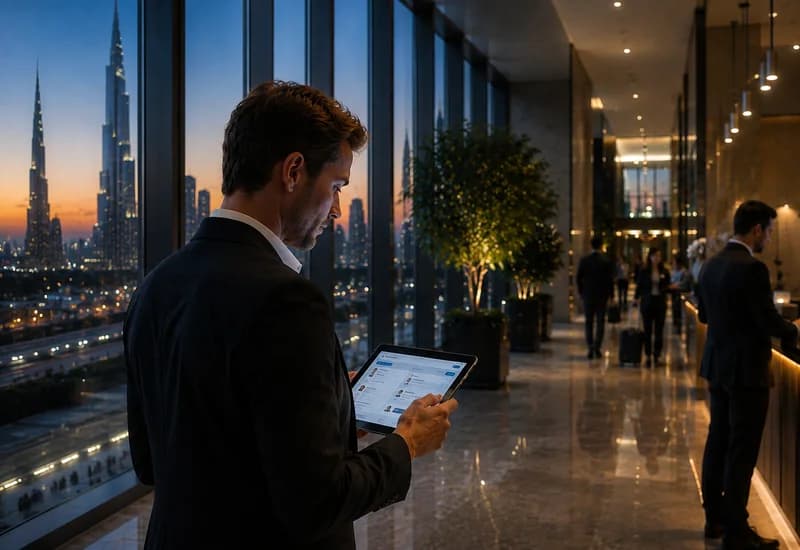
Illustration of a hospitality professional welcoming a guest in an elegant hotel lobby, representing Dubai's culture of service.

Industry Insights

Is Dubai Becoming the World's New Benchmark for Hospitality?

From five-star expectations to the people learning their craft, Dubai is developing something that could prove more influential than its extraordinary hotels: a new generation of hospitality expertise.

Written by Shiftly Editorial Team

6 min read

The Question Behind Five Stars

A five-star hotel in Dubai. A five-star hotel in Paris.

The rating may look familiar. The experience can feel remarkably different.

For travellers accustomed to Dubai's most ambitious hotels, returning to another luxury destination can bring a curious realisation. The attentiveness, speed and personalisation they had grown used to are not necessarily part of the experience elsewhere.

In December 2024, hospitality specialists at Dubai-based advisory firm Cavendish Maxwell questioned whether traditional hotel classifications adequately reflected differences between international markets. In an analysis reported by The National, they argued that five-star properties in the Gulf could offer substantially different standards of service and facilities from similarly rated hotels in Europe and the United States.

The debate exposed a familiar weakness in international hospitality: five stars do not mean precisely the same thing everywhere. Classification systems differ, and even properties carrying the same rating can deliver very different experiences.

But beyond the debate over stars lies a more intriguing question.

Dubai has spent decades attracting the world's most celebrated hotel brands, restaurateurs and hospitality professionals. Their traditions, expertise and ambitions helped shape the city's extraordinary growth.

Today, Dubai is developing something of its own.

Through professional education, international experience and an increasingly sophisticated hospitality industry, the city is beginning to ask a different question.

What if Dubai is no longer simply learning from the world's great hospitality destinations? What if the world could begin learning from Dubai?

Dubai Hospitality at a Glance

19.59M

International overnight visitors in 2025

154,264

Hotel rooms at year-end 2025

827

Hotel establishments

80.7%

Average hotel occupancy in 2025

When Five Stars Are No Longer Enough

Dubai welcomes guests from almost every corner of the world. Many arrive having experienced leading hotels in London, Singapore, Tokyo or New York. They bring expectations shaped by different cultures, service traditions and previous journeys.

For hospitality professionals, the challenge is not simply to meet a prescribed standard. It is to recognise what each guest expects, often without being told.

A highly attentive approach might delight one visitor and overwhelm another. A familiar, conversational style can feel welcoming in one setting and inappropriate in another.

Understanding the difference requires judgement built through experience.

At the luxury end of Dubai's market, competition adds another dimension. The city continues to attract ambitious openings and internationally recognised operators, creating constant pressure to distinguish the guest experience.

That does not mean every hotel in Dubai delivers exceptional service. Nor does it mean its standards surpass those of every established hospitality capital.

What makes Dubai interesting is the environment it has created: an international marketplace where high expectations, diverse service cultures and competitive pressure meet daily.

The question is whether that environment can produce something more lasting than remarkable guest experiences.

Can it also develop remarkable hospitality professionals?

How a City Trains for Excellence

Most hotel groups have their own service standards, training departments and management-development programmes.

Dubai is pursuing something broader.

Through Dubai College of Tourism, established by the Dubai Department of Economy and Tourism, the city is investing in the capabilities of professionals across its visitor economy.

One of its most significant initiatives is Dubai Way, an online learning platform designed to improve destination knowledge, customer service, cultural awareness and the skills needed to welcome international visitors.

By the end of 2025, the platform had surpassed 200,000 learners. More than 70,000 had completed training in autism and sensory awareness.

Hospitality is not confined to the entrance of a luxury hotel. A visitor's impression of Dubai develops through an entire journey, including restaurants, attractions and other everyday encounters with the people who represent the destination.

Dubai Way reflects an effort to strengthen that broader experience.

In June 2025, DET and Marriott International expanded their collaboration to include specialised training for hotel employees through Dubai Way, covering service excellence, cultural awareness and guest relations.

The partnership also built upon an apprenticeship initiative for Emirati talent, connecting hospitality education with practical industry experience and mentorship.

These initiatives show an attempt to treat service quality and workforce development as part of destination strategy.

There is an important distinction between providing training and proving its impact. Participation figures alone cannot demonstrate that guest satisfaction has improved or that employees have progressed professionally.

But they establish the scale of the commitment.

At the 2026 MICHELIN Guide Dubai ceremony, Akinori Tanigawa and the team at KIGO, located at Four Seasons Hotel DIFC, received the Service Award for their warm, professional hospitality. The restaurant also earned its first Michelin star.

It was an individual distinction, not a verdict on an entire city.

Yet it placed attention where the industry's most important work often happens: with the professionals who transform an exceptional product into a memorable experience.

Dubai's next competitive advantage may depend as much on developing people of this calibre as on opening the next extraordinary property.


Illustration of hospitality professionals learning restaurant service techniques during a practical training session.

Why Dubai Is Becoming a Place to Master the Craft

For an ambitious hospitality professional, choosing where to work is not simply a question of salary, reputation or the name above the entrance.

It is also a question of what they will learn.

Dubai offers an interesting proposition. Within one city, professionals can experience internationally recognised hotel brands, ambitious independent restaurant groups and a guest population whose expectations have been shaped by experiences across the world.

For someone developing a career in luxury hospitality, that exposure can be valuable.

Managing an evening service for an international clientele demands more than knowing the menu or following a sequence of procedures. It requires the ability to interpret different expectations, make decisions under pressure and lead teams whose experience may have been shaped in very different hospitality markets.

These are skills developed through practice. And Dubai offers professionals an environment in which to encounter those challenges regularly.

Of course, the learning is not automatic. Much depends on the quality of the employer, the leadership and the opportunities available within each establishment.

But for those who find the right environment, the experience can help deepen their professional judgement and broaden their ambitions.

This is where Dubai's growing influence becomes particularly interesting.

The city has long been a destination where hospitality professionals come to work. Its next opportunity is to strengthen its reputation as a place where they come to develop their expertise.

And in an industry built on international mobility, that experience can remain valuable long after a professional has moved on.

Dubai does not need to replace Paris, Lausanne, Tokyo or London as a centre of hospitality excellence.

It can become an important part of the same international journey.

A place where experience develops into expertise that travels.

Dubai at blue hour

What the World Might Take From Dubai

The idea of Dubai as an international hospitality benchmark remains a question rather than an established fact.

There is no definitive global measurement proving that its service standards surpass every other destination. The hospitality traditions of Japan, France, Switzerland, Singapore and other markets continue to influence the industry profoundly.

But influence in hospitality is not transmitted only through formal standards.

It also travels with people.

The general manager who takes on a new property abroad. The chef who joins an international opening team. The young professional whose first years in Dubai shape the way they lead, communicate and understand guests throughout the rest of their career.

These are possible pathways through which experience gained in Dubai can contribute to international hospitality. Measuring that influence will require more than the city's growing reputation.

The next challenge is to make its investment in people equally ambitious.

Developing future leaders requires meaningful mentorship, credible opportunities for advancement and workplaces that support the professionals expected to deliver exceptional service.

High standards are difficult to sustain through pressure alone.

Dubai has already demonstrated its ability to attract extraordinary hotels, global brands and millions of international visitors.

Its opportunity now is to turn that concentration of experience into lasting professional expertise.

Because the most enduring contribution of a great hospitality destination may not be found in its architecture or its awards.

It may be found in the people who build their careers there.

And when those professionals take their experience into the next chapter of their lives, they carry something of Dubai with them.

Not because they are leaving the city behind. But because of what they learned here.

Related stories

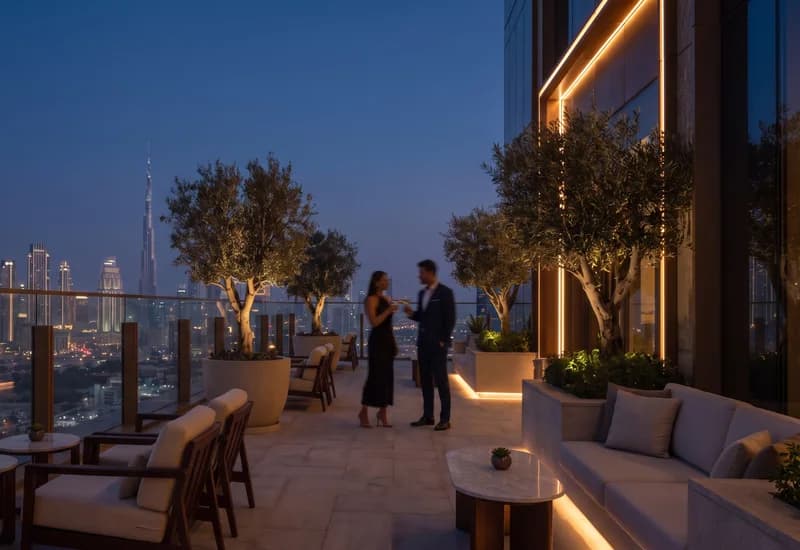
Guests talking on a rooftop restaurant terrace overlooking the Dubai skyline at dusk.

Industry Insights

Feature • 10 min read • Oct 9, 2026

The UAE Hospitality Story Is Far From Over

From Dubai’s tourism recovery and new wave of openings to Abu Dhabi’s Disney ambitions and Ras Al Khaimah’s transformational Wynn resort, the Emirates are writing an ambitious new chapter. At the heart of it all are the people who will bring these destinations to life.

Read story

City skyline at night representing global hospitality growth

Industry Insights

Guide • 4 min read • Aug 5, 2026

Hospitality Trends Shaping Careers and Hiring

The broader changes affecting hospitality careers and employer hiring practices, from candidate expectations to recruitment technology.

Read story

Ambient hospitality venue setting representing the industry's evolving experience

Industry Insights

Guide • 5 min read • Aug 5, 2026

The Future of Hospitality: People, Technology and Experience

How technology is changing hospitality operations and hiring, while human judgment and genuine guest connection remain central.

Read story

Your Next Chapter Could Begin in Dubai.

Discover career opportunities with the hotels, restaurants and hospitality groups shaping Dubai's future.