
Article body
Direct answer
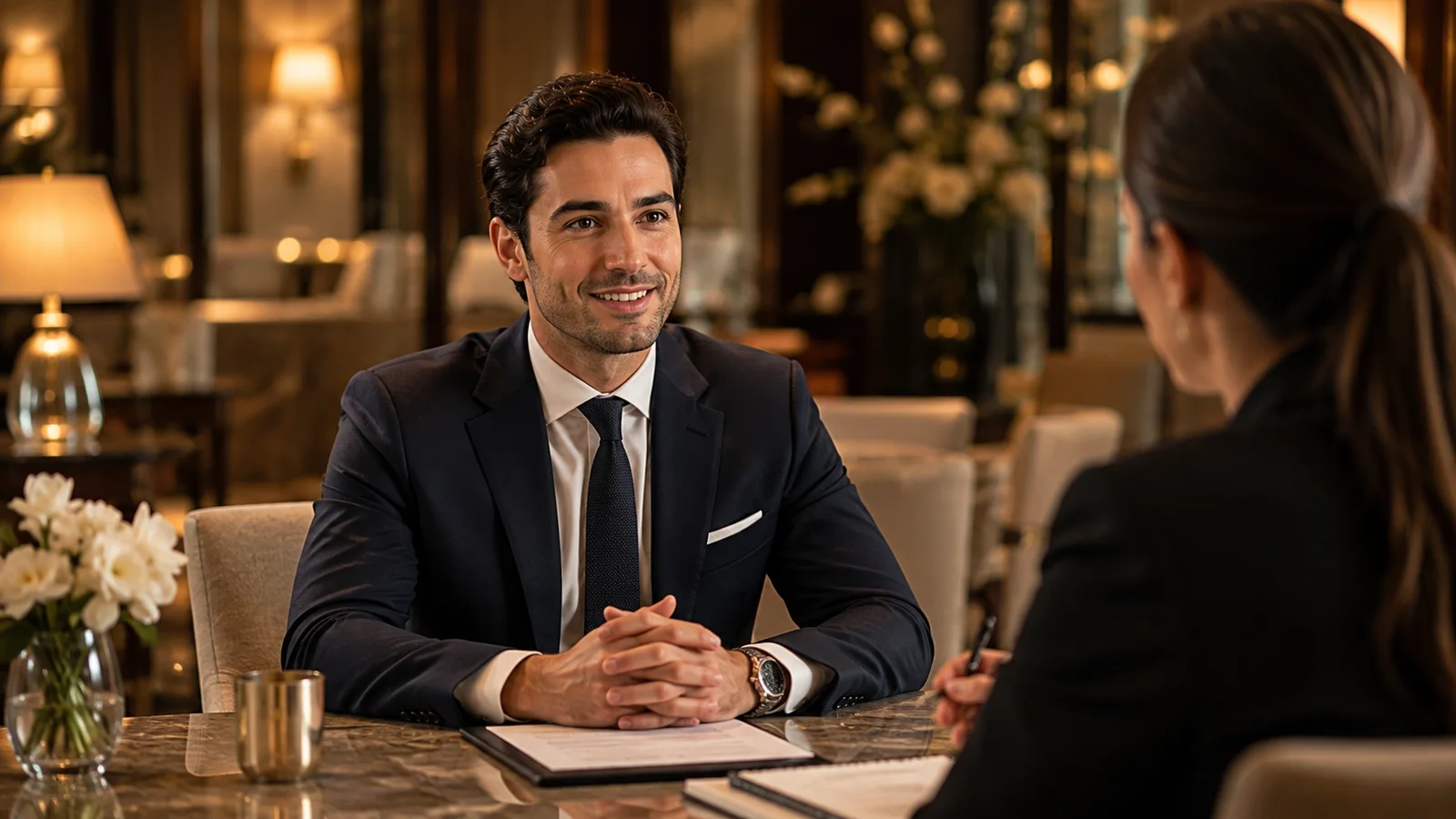
Preparing for a hospitality interview means researching the venue and role in advance, practising clear and honest answers about your real experience, and being ready to discuss availability, language ability and how you handle real guest situations.
Hospitality interviews often move quickly and focus on practical judgment rather than textbook answers. Candidates who prepare specifically for that, rather than memorising generic interview advice, tend to come across as far more confident and genuine.
Research the Group and the Venue
Before the interview, look up the venue's concept, size and service style, and check whether it belongs to a wider hospitality group with other properties. Browsing a hospitality group or a specific venue page beforehand gives you real detail to reference, which stands out far more than a generic opening about having heard great things.
Understand the role and service environment
Re-read the job description closely and think through the practical shape of the role: roughly how many covers, rooms or guests it involves, what the shift pattern looks like, and what kind of guest the venue typically serves. Walking in with that understanding lets you ask sharper questions and give more relevant answers.
Prepare a concise introduction
A strong opening answer to tell me about yourself takes thirty to sixty seconds, not five minutes. Cover your current or most recent role, the type of venue, and one or two strengths relevant to this specific opportunity. Save the full detail for the questions that follow.
Explain previous responsibilities clearly
Practise describing two or three real situations from previous roles in plain, specific language, rather than repeating vague statements like I did a bit of everything. A clear, concrete example is always more convincing than a broad claim.
Be ready to discuss availability and mobility
Hospitality shifts often include evenings, weekends and split shifts. Be honest about your availability and, if relevant, your openness to relocation, before the employer has to ask directly. This avoids wasted time on both sides later in the process.
Address language expectations honestly
If a role requires a specific language, be upfront about your real proficiency rather than overstating it to get past the interview stage. Being placed in a guest-facing role that requires stronger language skills than you actually have creates pressure for you and risk for the employer.
Presentation matters, professionally, not personally
Dress appropriately for the venue's standards, whether that means a formal look for a five-star hotel or smart-casual for a beach club, and arrive well rested and on time. This is about matching the professional expectations of the environment, not about appearance judgments that have no place in a fair hiring process.
Interview fundamentals worth mastering
Strong hospitality interviews are built around real examples. Prepare a few situations that show how you handle guests, pressure, teamwork and service recovery, while keeping every answer specific and truthful.
Prepare for behavioral questions, without memorising a script
Interviewers often ask about real situations rather than hypotheticals: a guest complaint, a service recovery, a rush period, a moment of teamwork, an upselling opportunity, or a disagreement between front and back of house. A useful way to prepare is to think through the situation, your action and the outcome for two or three real examples, without writing out word-for-word answers that can sound rehearsed and rigid under pressure.
- A guest complaint you resolved calmly
- A moment of service recovery after something went wrong
- How you stayed organised during a genuinely busy rush
- A time you supported a colleague or new team member
- An honest example of upselling that fit the guest's actual needs
- How you handled friction between front-of-house and the kitchen or back-of-house
Example
Before: We had an angry guest once, and I just tried to calm them down and it worked out.
After: A guest was unhappy about a delayed table on a busy Friday night. I acknowledged the wait directly, offered a complimentary drink while they waited, and kept them updated every few minutes until the table was ready. They left a positive comment on the way out.
Know your safety and standards knowledge
Basic food safety, guest safety and any brand-specific standards relevant to the role are fair territory in a hospitality interview. If you hold a certification, mention it. If you do not, be honest and show willingness to learn quickly.
Prepare questions to ask the interviewer
Asking about team structure, training, service standards or typical shift patterns shows genuine interest and helps you judge whether the role actually fits you. Interviews work both ways, and thoughtful questions usually leave a stronger impression than none at all.
Before the final stretch
Prepare your profile before your next opportunity.
Create your Shiftly profileIn-person versus video interviews
In-person interviews often let you observe the venue's atmosphere directly, which is useful information in itself. Video interviews remove that context, so you need to work a little harder to convey energy and clarity through the screen alone.
Set up your environment for a video interview
Test your connection, camera and audio beforehand, choose a quiet space with good lighting and a neutral background, and keep your phone or notes nearby but out of frame. Small technical problems are common and usually forgiven, but a well-prepared setup removes an unnecessary source of stress.
Follow up after the interview
A short, genuine thank-you message within a day or two, restating your interest and briefly referencing something specific from the conversation, is enough. Avoid following up multiple times in quick succession, and be patient with hiring timelines, since hospitality teams are often managing interviews around live service.
A reminder to stay honest
It is tempting to give the answer you think an interviewer wants to hear. Hospitality teams work closely together, and small exaggerations tend to surface quickly once you are actually on shift. An honest, specific answer holds up far better than an impressive-sounding one that does not.
Interview-day preparation checklist
- Researched the venue, its concept and any wider group it belongs to
- Prepared a concise 30 to 60 second introduction
- Thought through two or three real examples for behavioral questions
- Confirmed availability, mobility and language ability honestly
- Prepared two or three questions to ask the interviewer
- Tested technology in advance if the interview is by video
- Planned a short, genuine follow-up message after the interview